Moto AI Service Writer
Where Moto gets its data and how accurate it is
An honest look at the data behind Moto AI's labor times, parts, and pricing, plus how Pista handles accuracy and your shop data.
Where Moto gets its data and how accurate it is
Shop owners ask this a lot, and they should: if Moto is drafting the numbers a customer sees, where do those numbers come from? The short answer is that Moto does not make them up. It pulls from the same trusted sources your shop already relies on, and it applies your own settings on top. Here is the full picture.
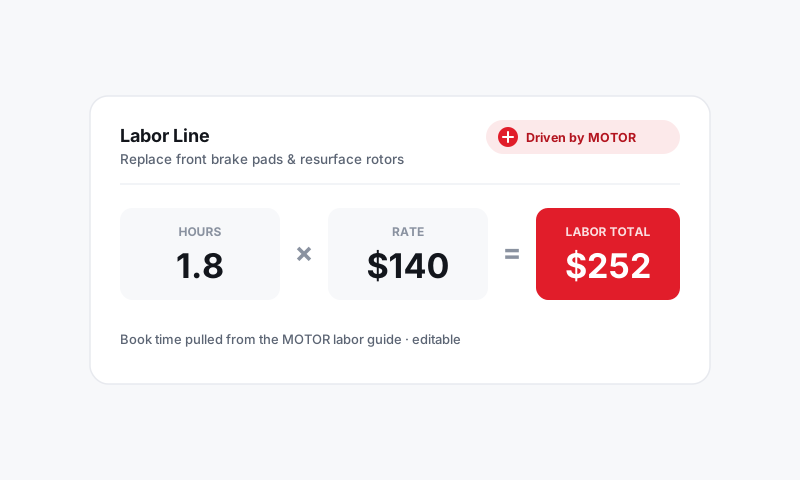
Where the numbers come from
| Part of the draft | Source |
|---|---|
| Labor times | MOTOR data for the vehicle's year, make, model, and engine |
| Parts and pricing | Your connected suppliers, with live availability and cost |
| Markups and labor rate | Your shop's pricing settings |
| Tax and shop fees | Your tax and fees configuration by store and state |
| Vehicle details | VIN decode and your CRM history |
| Recalls | Open recall data tied to the VIN |
Moto's job is to assemble these into a clean draft. The accuracy of each line traces back to the source behind it, not to a guess.
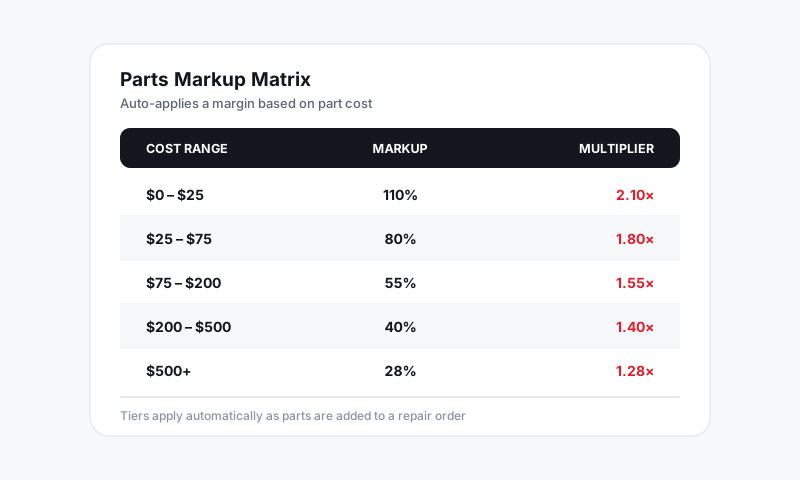
How accurate is it?
Very, when the vehicle is identified correctly, because the inputs are real industry data and your own configuration. Accuracy slips in predictable, fixable cases:
- Wrong or missing engine/trim. This is the number one cause of bad labor or parts. Use the VIN.
- Labor data gaps. Some uncommon jobs or vehicles have no MOTOR time. Moto flags the gap and leaves it for you instead of guessing.
- Outdated mileage or history. If the record is stale, maintenance recommendations can be off.
Good to know: Moto is designed to fail loudly, not silently. When it cannot confirm a labor time or a part, it tells you on the line rather than filling in a number that looks plausible. That is by design, so a gap never becomes a wrong quote to a customer.
You always have the final say
Every figure Moto drafts is editable. Your labor rate, your markups, your fees, and your judgment override anything in a draft. Moto speeds up the typing; it does not replace the advisor.
How your shop data is handled
A few things worth knowing as an owner:
- Moto works inside your shop's data: your customers, your vehicles, your pricing.
- It does not send estimates, authorize work, or take payments on its own.
- Your customer and pricing data is used to draft tickets for your shop, not shared as someone else's pricing.
The bottom line
Treat Moto's output the way you would treat a draft from a sharp new advisor: trustworthy because of where the data comes from, but always worth a quick check before it reaches the customer. Identify the vehicle correctly, keep your shop settings current, and run the review checklist, and the numbers Moto puts in front of you will be numbers you can stand behind.
Still have a question about where moto gets its data and how accurate it is?
Contact support