Reports
Sales and revenue reports
Read your top-line sales, average repair order, and car count, and learn what each number is really telling you about the shop.
Revenue is the first thing every owner checks and the easiest one to misread. Pista's sales report gives you the top line, but more importantly it breaks that line into the parts that actually move it: how many cars you saw, what the average ticket was, and how the mix split between labor, parts, fees, and tax. Here is how to pull it and what to watch.
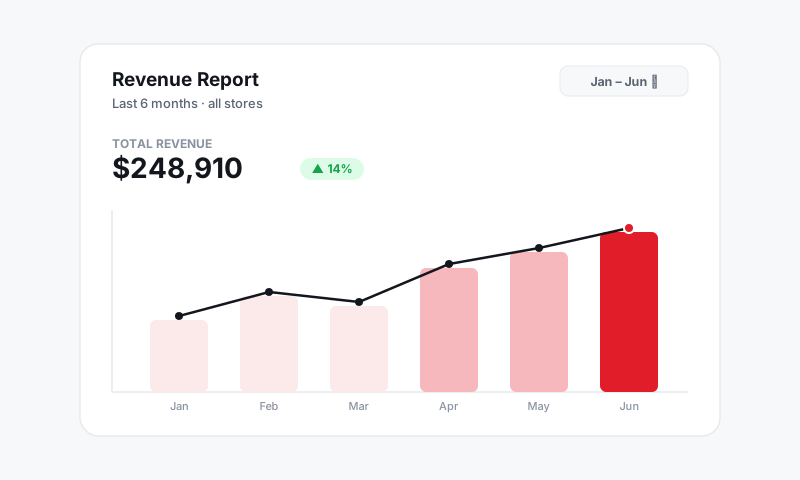
Open the sales report
- Go to Reports and open the Sales and revenue card.
- Set your date range and store in the top bar.
- Read the summary tiles first: total sales, car count, and average repair order.
Understand the headline numbers
- Total sales is the sum of all closed, paid ROs in your window, after discounts and before you back out tax.
- Car count is the number of unique tickets that closed, not the number of customers. One customer with two vehicles counts as two.
- Average repair order (ARO) is total sales divided by car count. This is the single most useful number on the page for spotting trends.
Good to know: A flat revenue month with a rising ARO and a falling car count means you are doing bigger jobs for fewer cars. That is a sales story, not just an accounting one, and it tells you where to push.
Break revenue down by mix
- Scroll to the revenue breakdown below the tiles.
- Read the split across labor, parts, fees, and sales tax.
- Watch the labor-to-parts ratio. A healthy general repair shop usually carries strong labor; if parts are swamping labor, your pricing or your job writing needs a look.
Slice it further
- Use the breakdowns to view sales by service advisor, by day, or by job category where available.
- Click any row to drill into the ROs behind it.
- Open a source RO directly when a figure looks wrong so you can fix it at the ticket.
Tips
- Tax is not revenue. When you tell a partner or a lender what the shop "did," quote sales after backing out tax, or you will overstate the business.
- Track ARO weekly, not just monthly. It reacts fast to how your advisors are presenting inspections and declined work.
- A spike in fees as a share of the ticket can mean shop-supply or disposal fees are set too aggressively. Customers notice, so keep that share sane.
Read total sales for the headline, ARO for the trend, and the mix for the why. That combination turns a revenue number into a decision.
Still have a question about sales and revenue reports?
Contact support