Labor and MOTOR Data
Standard-time fallback explained
Learn what happens when MOTOR has no published labor time for a job, how Pista's standard-time fallback fills the gap, and how to replace it with a real number.
Standard-time fallback explained
MOTOR's labor database is deep, but it does not cover every possible operation on every vehicle ever built. Aftermarket accessories, very new models, oddball one-off jobs, and rare configurations can all come up empty. Instead of leaving the line blank or stalling your estimate, Pista uses a standard-time fallback so you always have a number to work from.
What the fallback is
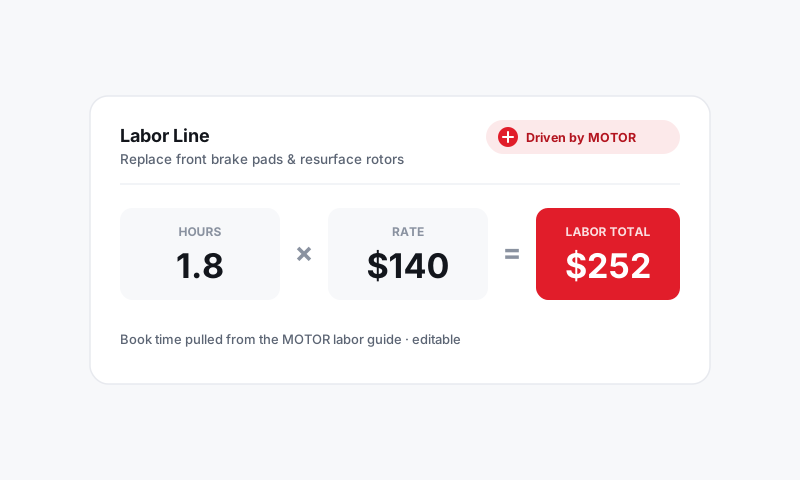
When Pista cannot find a published MOTOR time for the exact job and vehicle, it supplies a standard time: a reasonable default labor estimate for that type of operation. It keeps your build moving and your estimate complete. The line is clearly marked so you and your team know the hours are an estimate, not a book time.
How to spot it
A labor line built on the fallback will not carry the Driven by MOTOR tag, or it will flag the hours as a standard estimate. That label is your cue: this number is a placeholder, and you should confirm it before the estimate goes out the door.
What to do when you see it
- Sanity-check the hours. Does the time match what your shop knows this job really takes?
- Adjust if needed. Click the hours field and enter your shop's real labor time for the job.
- Save it to your menu. If you do this job often, build it into a saved service so the time is right every time without re-keying. See Adding services, labor, and parts.
Why a fallback beats a blank line
- No dead ends. You can finish and send the estimate even on an unusual job.
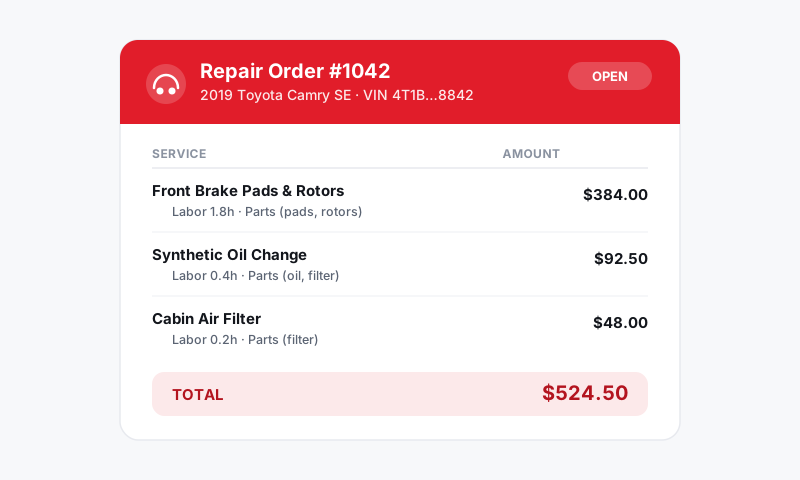
- No silent zeros. A blank or $0 labor line is how shops give away work. The fallback makes sure labor is always present and visible.
- Easy to fix. Because it is flagged, nothing hides. You replace it with a confident number in seconds.
Common reasons MOTOR comes up empty
- A brand-new model year that has not been published yet.
- Accessory or upfit work, like a hitch, lift, or aftermarket electronics.
- A vehicle that was not decoded by VIN, so Pista is missing the engine detail it needs to match. Decoding the VIN often turns a fallback into a real MOTOR time. See How Pista pulls MOTOR labor times.
- A search that did not match a known operation. Try rephrasing, for example replace serpentine belt instead of belt squeal.
Tip: Keep a short list of your shop's most common "no-book" jobs and the hours you bill for each. Turn each one into a saved service. Over time your menu does the work the book cannot, and your team stops guessing.
Good to know: The fallback is never meant to be the final word. Treat it as a smart starting point that you confirm, the same way a seasoned writer double-checks any number before it reaches the customer.
Still have a question about standard-time fallback explained?
Contact support