Labor and MOTOR Data
How Pista pulls MOTOR labor times
Understand where Pista's labor hours come from and why decoding the vehicle by VIN gives you book times that match the exact engine on the lift.
How Pista pulls MOTOR labor times
Every labor line in Pista is meant to answer one question: how long does this job actually take on this vehicle? Pista answers it with MOTOR labor data, the same industry-standard time guide that the big estimating systems use. This article explains where those times come from so you know to trust them and how to get the most accurate number on the ticket.
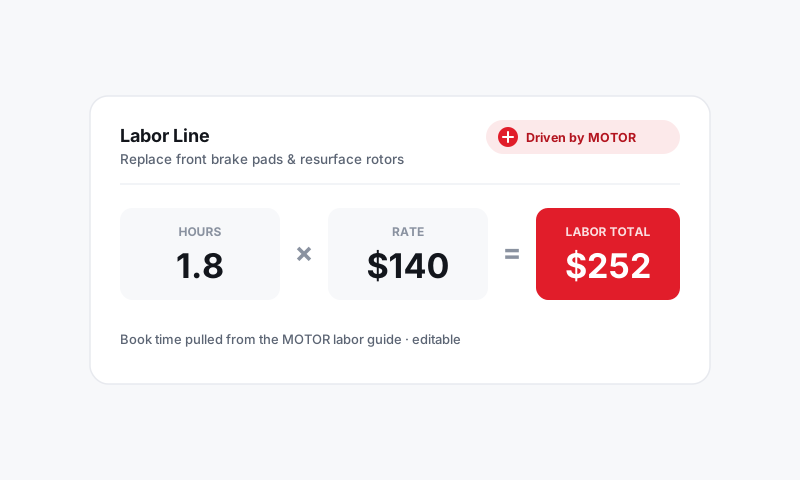
What "Driven by MOTOR" means
When you see the Driven by MOTOR tag on a labor line, the hours were pulled from MOTOR's published labor-time database, not estimated by a person and not guessed by AI. MOTOR builds these times from real procedures: how many bolts, how much disassembly, what has to come off to reach the part. That is why a job can take 1.1 hours on one car and 2.4 hours on another that looks similar.
The vehicle decides the time
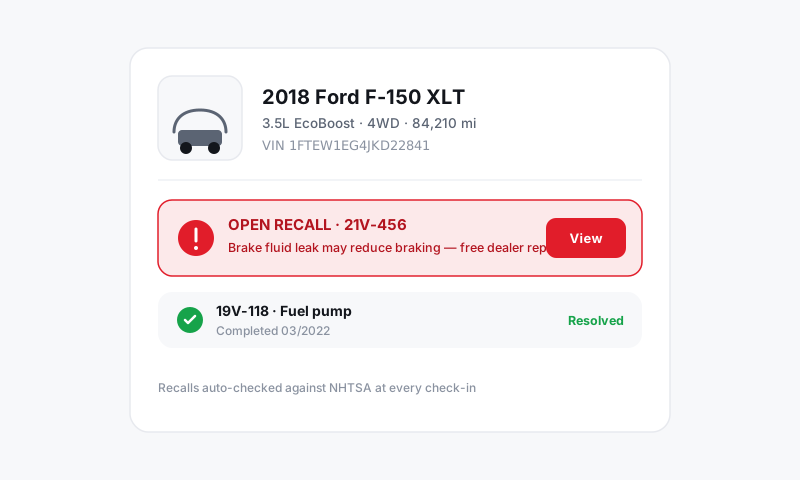
The single most important thing for accurate labor is the decoded vehicle on the repair order.
- Add the customer's vehicle to the RO and decode it by VIN.
- Confirm the year, make, model, and engine that come back.
- When you add labor, Pista keys the lookup to that exact configuration.
If two trims share a model name but ship different engines, the labor times can differ. Decoding by VIN nails the engine so the time you bill is the time the book actually publishes for that powertrain.
How a time lands on the line
- Inside a job, click Add labor.
- Search the operation in plain language, for example replace water pump or front brake pads.
- Pista matches your search to the MOTOR operation for the decoded vehicle.
- The line fills in the labor hours, and your labor rate turns those hours into a price.
You never type the hours yourself unless you choose to override them.
Standard, warranty, and severe times
MOTOR often publishes more than one time for the same job. Where it applies, Pista shows the standard (retail) time by default, which is the right number for everyday customer-pay work. Warranty times are typically tighter and are meant for OEM warranty claims, not your cash tickets, so reach for those only when you are filing under a manufacturer program.
Good to know: Labor times cover the operation, not the condition of the specific car. A seized bolt or rust-welded hardware is exactly when you should override the hours. See Standard-time fallback explained for what happens when no published time exists.
Why this protects your shop
- Consistency. Every writer and every tech bills the same job the same way.
- Defensibility. When a customer questions an hour, "that is the published labor time for your engine" is a clean answer.
- Speed. No flipping through a paper guide or arguing about a number at the counter.
Once your times are flowing, set up your labor rates so those hours convert into the right dollars, and turn on auto-loading labor to save even more clicks.
Still have a question about how pista pulls motor labor times?
Contact support